

Articles by Tyler Karstensen
Join Our Mailing List
Receive special deals and more, right to your inbox
Recommended Products

$257.99Each
CEC163TW

$249.99Each
FFI10HBX1

$24.99Each
T522-W


$32.08Pack of 20
BVS2

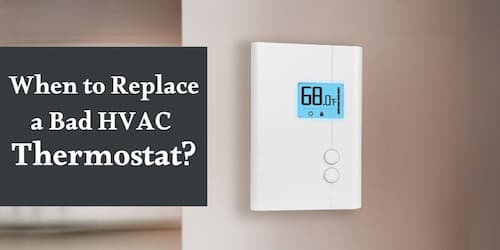
Symptoms of a bad thermostat can mean your furnace or air conditioner refuses to start, the air conditioner runs constantly and won’t turn off, the thermostat doesn’t respond to temperature changes, or the HVAC system short cycles. You can make some simple fixes, like checking the batteries, the circuit breaker, and the wiring, or clean your mechanical thermostat.

When replacing your thermostat, make sure to shut off all power to the heating and cooling system before doing any electrical work. Additionally, we recommend contacting an electrician to replace your thermostat.
Depending on the type of Smart thermostat you choose, they may operate using line or low voltage. Make sure to check what type of voltage a Smart thermostat operates with before purchasing or installing.
Recommended Products
$257.99Each
CEC163TW
$249.99Each
FFI10HBX1
$24.99Each
T522-W
$32.08Pack of 20
BVS2

Line voltage or line voltage wiring refers to the amount or number of volts that a circuit or socket has. Line voltage thermostats often work with electric heaters, including direct-wired electric furnace or baseboard heaters, while a low voltage thermostat works with central HVACs, like furnaces, boilers, radiant heaters, air conditioning, and more.

Read our thermostat buyer's guide to find the best thermostat for your HVAC system needs. An analog thermostat must be changed by hand and may not always show an accurate temperature reading while digital thermostats have an easy-to-read display and an automatic feature which will shut off the AC once the home reaches the desired temperature.

Read our hand dryer guide to find the best hand dryers for your business. When purchasing a hand dryer, consider the cost, speed or drying time, power, noise, energy use, hygiene, and ADA compliance.
Warehouses require appropriate lighting to stay safe and remain well-lit. See how LED and Smart lighting can help boost energy efficiency and reduce their impact on the environment!