


Gas and Electric Wall Heaters: Which Should I Buy?
Wall heaters give focused heat in individual rooms or zones. They do not need central ducts and save floor space compared to portable heaters. Wall heaters typically come in two different models to choose from: electric and gas. Electric and gas models can both provide effective room heating, but they differ in installation, operating cost, heat output, and fuel requirements.
TL;DR:
- Electric wall heaters are often the simpler choice when you need targeted room heating and already have adequate electrical capacity.
- Gas wall heaters may provide higher heat output and can make sense where natural gas or propane is feasible.
The better option depends on installation requirements, local energy prices, room size, venting, and how the heater will be used.
Gas Vs. Electric: What Does It Mean and Which Do I Choose?
The decision between gas and electric wall heaters is simply dependent on what problem you are looking to solve. For example, the answer to which option is the least expensive could be different from which is the most powerful. First, it is important to understand what it means for a wall heater to be electric or gas.
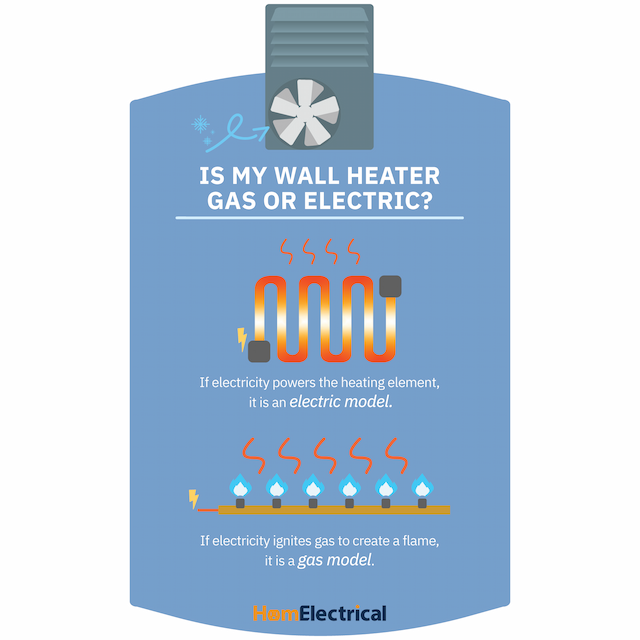
The difference between gas and electric wall heaters comes down to the energy source used to produce heat.
- Electric wall heaters use electricity as the heat source, typically passing electrical current through a resistance heating element.
- Gas wall heaters burn natural gas or propane to produce heat. Some gas models also use electricity for ignition, controls, or blowers, but gas remains the primary heat source.
Recommended Products


Although making a choice based solely on the information above sounds simple, many still find the decision difficult and prefer having more information before investing in a wall heater. There are differences in total cost, installation ease, and environmental impact. Consider all of them to make a choice that helps you and your home.
Here is a list of factors commonly considered when purchasing a heater:
| ELECTRIC MODELS | GAS MODELS | |||
|---|---|---|---|---|
| HOW EFFICIENT IS IT? | Electric resistance heaters convert nearly all incoming electricity into heat at the point of use | Vented gas heaters lose some heat through combustion exhaust | ||
| HOW FAST CAN THE MODEL HEAT UP? | Fan-forced models can provide quick room heat. Warm-up time varies with wattage and design. | Gas wall heaters can provide strong heat output with heat felt almost immediately | ||
| WHAT IS THE PRICE TO RUN? | Operating cost depends on local utility rates, heater efficiency, heat output, room conditions, and how long the heater runs. Compare your local cost per kWh of electricity with the cost of natural gas or propane before choosing. | |||
| WHAT IS THE MODEL'S PURCHASING PRICE? | Equipment and installation are often simpler when adequate electrical service already exists. | Installation can cost more if gas piping, venting, or combustion-air provisions must be added | ||
| ENVIRONMENTAL IMPACT | No onsite combustion emissions. | Burning natural gas or propane creates combustion emissions. Vented models exhaust combustion gases outdoors | ||
Are Wall Heaters Right for Every Space?
Manufacturers design wall heaters for individual rooms or zones. If you need whole-home heating or a different type of supplemental heat, options such as baseboard heaters, heat pumps, kickspace heaters, and radiant heating may be a better fit.
Visit our blog going over different heating options and find your solution today!
Summary
Electric and gas wall heaters can both provide effective room-by-room heating. Electric models may be simpler where electrical service is readily available. Gas models can provide strong heat output in regions where natural gas or propane is feasible.
The best choice depends on your room size, available utilities, installation requirements, local energy prices, and preferred controls.
Still deciding? Visit our Wall Heater Buyer's Guide for sizing and product-selection help, or shop our selection of wall heaters. Call today for contractor pricing and pallet discounts!

Recommended Products
Receive special deals and more, right to your inbox
Receive special deals and more, right to your inbox