


What Does a GFCI Outlet Look Like? (Visual Guide)
Ground Fault Circuit Interrupter, better known as a GFCI or GFI, provide critical protection against electrical shock. While standard 120V household outlets pass electrical current continuously, a GFCI outlet constantly monitors the balance of electricity flowing through a circuit and cuts power in milliseconds if an imbalance is detected.
Identifying whether an outlet is GFCI-protected is essential for home safety inspections, electrical troubleshooting, and NEC code compliance
TLDR: Most GFCI receptacles resemble standard duplex outlets, but they have TEST and RESET buttons between the plug openings. Many also display a status light or markings such as TR for tamper-resistant and WR for weather-resistant. Other GFCI styles may include a switch, have no plug slots, or provide both AFCI and GFCI protection.
Recommended Products


4 Visual Features of a GFCI Outlet
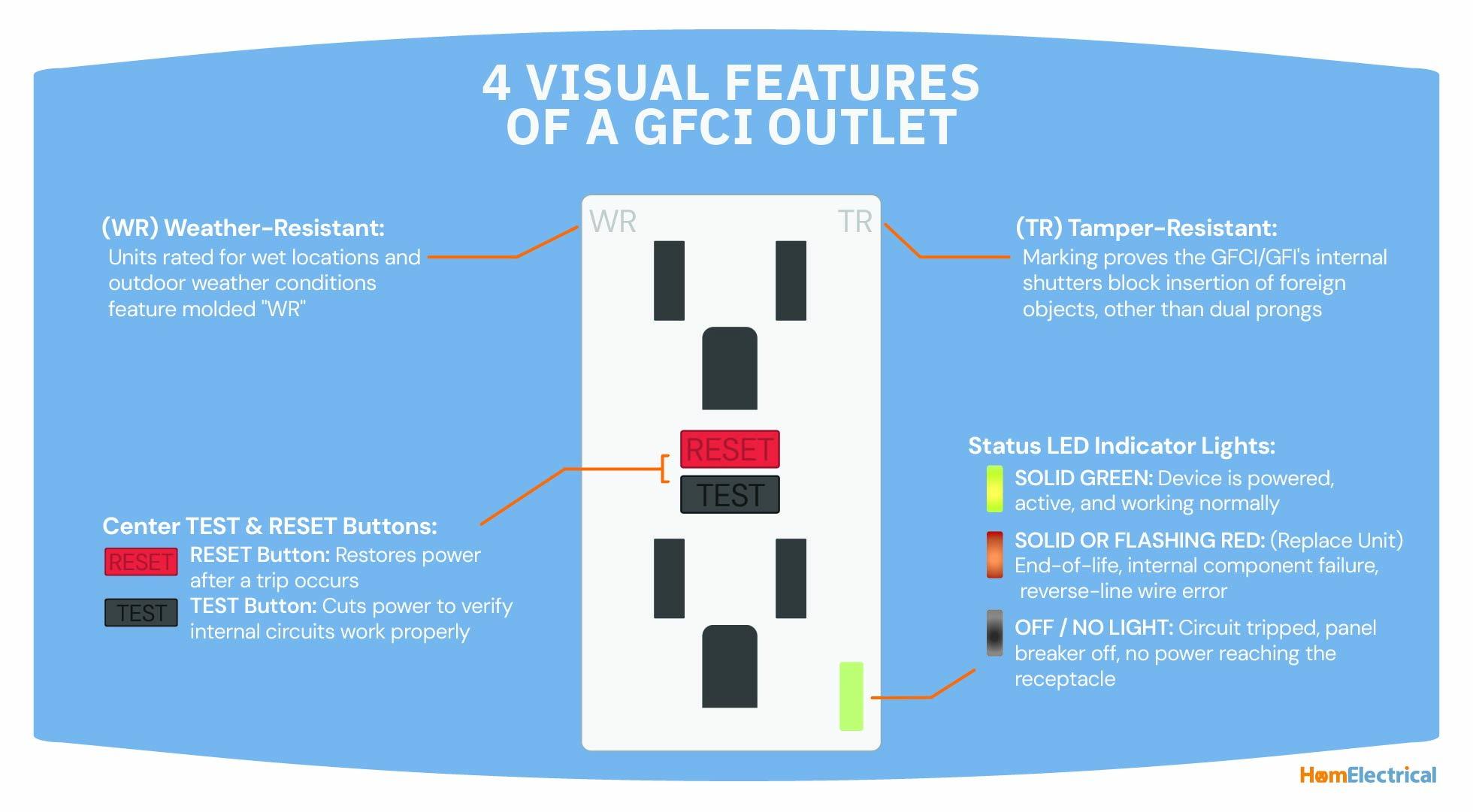
*NOTE: Button colors & positions vary based on manufacturer. Indicator-light colors and meanings also vary depending on model and color. Follow the markings and instructions provided with your specific device*
You can visually distinguish a GFCI outlet from a standard duplex outlet by looking for four key faceplate components:
- Center TEST & RESET Buttons: Located directly between the upper and lower plug receptacles.
- RESET Button (usually red or black): Restores power after a trip occurs.
- TEST Button (usually black or yellow): Manually cuts power to verify internal sensing circuits work properly.
- Tamper-Resistant (TR) Internal Shutters: Built-in mechanical shutters inside the blade slots that block insertion of foreign objects unless dual prongs enter simultaneously. Look for a tiny embossed "TR" logo on the receptacle face.
- Weather-Resistant (WR) Outdoor: Units rated for wet locations feature a molded "WR" mark on the faceplate and use UV-stabilized casing with corrosion-resistant metal contacts.
- Status LED Indicator Light: Located in the bottom corner of modern GFCI faces.
- Solid Green: Device is powered, active, and functioning normally.
- Solid or Flashing Red: End-of-life status, internal component failure, or reverse-line wiring error (unit must be replaced).
- Off / No Light: Circuit tripped, panel breaker off, or no power reaching the receptacle.
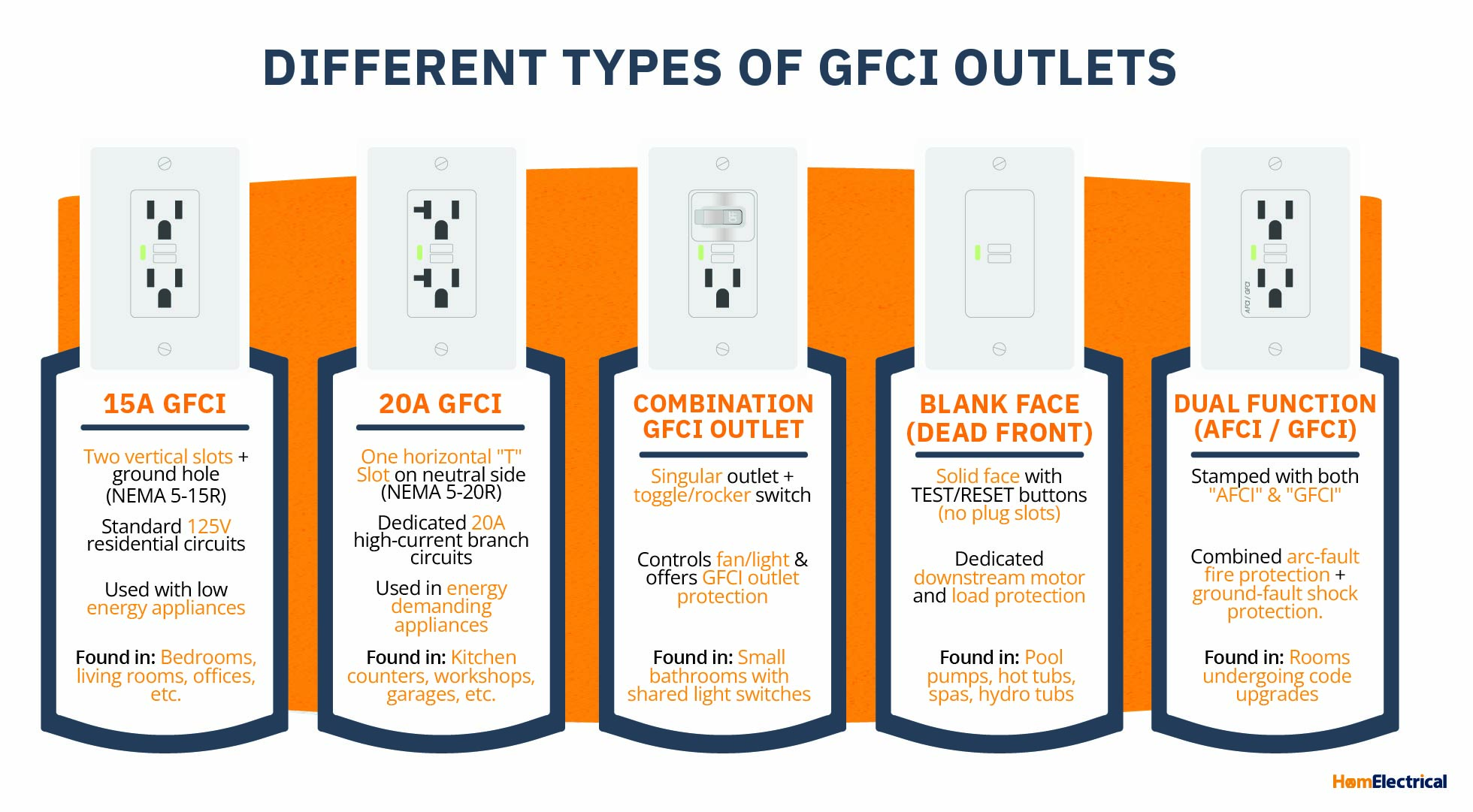
GFCI Outlet Variants & Identification Chart
The GFCI Receptacle is very similar to a common wall receptacle, also known as an outlet. There are several different types, all of which ensure a specific type of extra protection against ground faults. Learn about the visual features of GFCI receptacle & a GFI outlet below.
| GFCI Device Type | Distinct Visual Feature | Common Location / Application |
|---|---|---|
| Standard 15A GFCI | Two vertical slots + round ground slot | Indoor residential (bathrooms, counters) |
| High-Current 20A GFCI | NEMA 5-20R design featuring a T-shaped neutral slot | Dedicated 20A kitchen counter circuits, workshops, and commercial bays |
| Combination GFCI / Switch | Single outlet receptacle + toggle/rocker switch | Small bathrooms with shared light switches |
| Blank Face (Dead-Front) GFCI | Solid face with TEST/RESET buttons (no plug slots) | Dedicated motor protection (spa, hydro-tub) |
| Dual-Function (AFCI / GFCI) | Face stamped with both “AFCI” and “GFCI” | Modern bedroom & living area code upgrades |
Note: Under NEC 210.21(B)(2), standard 15A GFCI receptacles are permitted on 20-amp multi-outlet branch circuits, provided there is more than one receptacle on the circuit.
Application & Code Breakdown
- Tamper-Resistant (TR) GFCI: Required by NEC code for all standard residential 15A and 20A 125V installations to protect children from inserting objects into sockets. Identified with TR on GFI face.
- Weather-Resistant (WR) GFCI: Must be paired with a wet-location "In-Use" cover for outdoor patios, decks, and exposed building exteriors. WR units use UV-stabilized casing and corrosion-resistant contacts. Identified with WR on GFCI face.
- Tamper-Resistant/Weather-Resistant (TR/WR): Combine the characteristics of both the tamper resistant and weather-resistant GFCI receptacles. Feature both TR & WR on outlet face.
- Blank Face (Dead-Front) GFCI: Provides dedicated ground-fault switching and lockout protection for hardwired loads like pool pumps, spas, and hydro-tubs without offering exposed plug slots.
- 15A vs. 20A GFCI Outlets: Standard 15A outlets use two vertical slots. High-current 20A outlets feature a horizontal "T-slot" on the neutral side to accommodate heavy-duty commercial equipment and kitchen appliances.
How GFCI Outlets Detect Current Imbalance
Behind the faceplate, a GFCI receptacle monitors the magnetic field surrounding the incoming hot wire and returning neutral wire using a internal Differential Current Transformer
[Hot Wire: 15 Amps] --> [Current Transformer Sense Ring] --> [Electrical Load] -->[Triggers Trips at 4-6 mA Delta] --> [Neutral: 14.96 Amps]
- Under normal operation, the current flowing in on the hot wire equals the current returning on the neutral wire
- If current leaks to ground (such as through water or a person), an imbalance occurs.
- When the current differential reaches 4 to 6 milliamperes (mA), the internal sensing coil trips the mechanical switch in 1/40th of a second, stopping power before harm occurs.
How to test your GFCI outlet in 3 Steps
.jpg&w=390&q=75)
3-Steps is All You Need
Testing monthly ensures internal mechanical contacts haven't welded together from power surges:
- Plug in a Test Device: Insert a standard lamp or voltage tester into the GFCI outlet and turn it on.
- Press the TEST Button: Click TEST. The RESET button should pop out noticeably, and the lamp/tester must shut off immediately.
- Press the RESET Button: Click RESET firmly back in. The indicator light should illuminate green, and power should return to the lamp.
Pro Tip: If pressing TEST does not cut power, or if RESET fails to snap back into place, the device has failed its internal self-test and must be replaced immediately.
Want to Know More?
This blog covers how GFCIs look but you might consider
- Confused on terms? Learn why GFI and GFCI refer to the exact same protection mechanism in our breakdown of GFI vs GFCI outlets.
- Wall Receptacle or Panel Breaker? Determine whether you need an outlet or a breaker in our GFCI receptacle vs. GFCI breaker guide.
- Reviewing Building Codes? See mandatory room requirements in our guide to Where Are GFCI Breakers Required?
Shop Certified GFCI Outlets & Accessories
We serve homeowners and contractors year-round, code-compliant devices to meet every budget need.
Stay Connected!
What are ground faults dangerous?
Ground faults remain a leading cause of home electrical injuries, making functioning GFCIs a vital safety line. In order to eliminate the possibility of these ground fault accidents, Charles Dalziel, an electrical engineering professor at the University of California, invented the ground-fault circuit interrupter (GFCI) in 1961. According to the Electrical Safety Foundation International (ESFI) and CPSC data, widespread GFCI adoption has reduced residential electrocutions by over 50% since the 1970s. Each year safety standards allow for greater and greater protection from consumer electrocution.
Recommended Reading
.jpg&w=500&q=75)
GFI and GFCI refer to the same electrical safety device. GFCI stands for Ground-Fault Circuit Interrupter, while GFI is a shortened trade term for Ground Fault Interrupter.
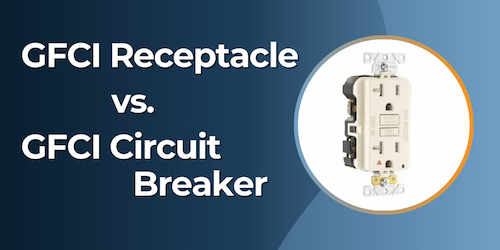
Ground fault circuit interrupter devices protect against ground faults in the home. GFCI receptacles and GFCI circuit breakers have similar functions, but different benefits depending on your electrical safety needs.

GFCI breakers are installed in main breaker panels to provide ground fault protection across entire circuits, especially in moisture-prone areas like bathrooms, kitchens, and outdoor spaces, as required by the NEC. They serve as an efficient alternative to multiple GFCI receptacles by offering centralized protection and reducing the risk of electrical shock.

Electrical trips can occur due to worn out insulation, conductive dust or debris, water, or electrical wiring deterioration. Discover more ways to troubleshoot your GFCI if it starts to trip.

Recommended Products
Receive special deals and more, right to your inbox
Receive special deals and more, right to your inbox